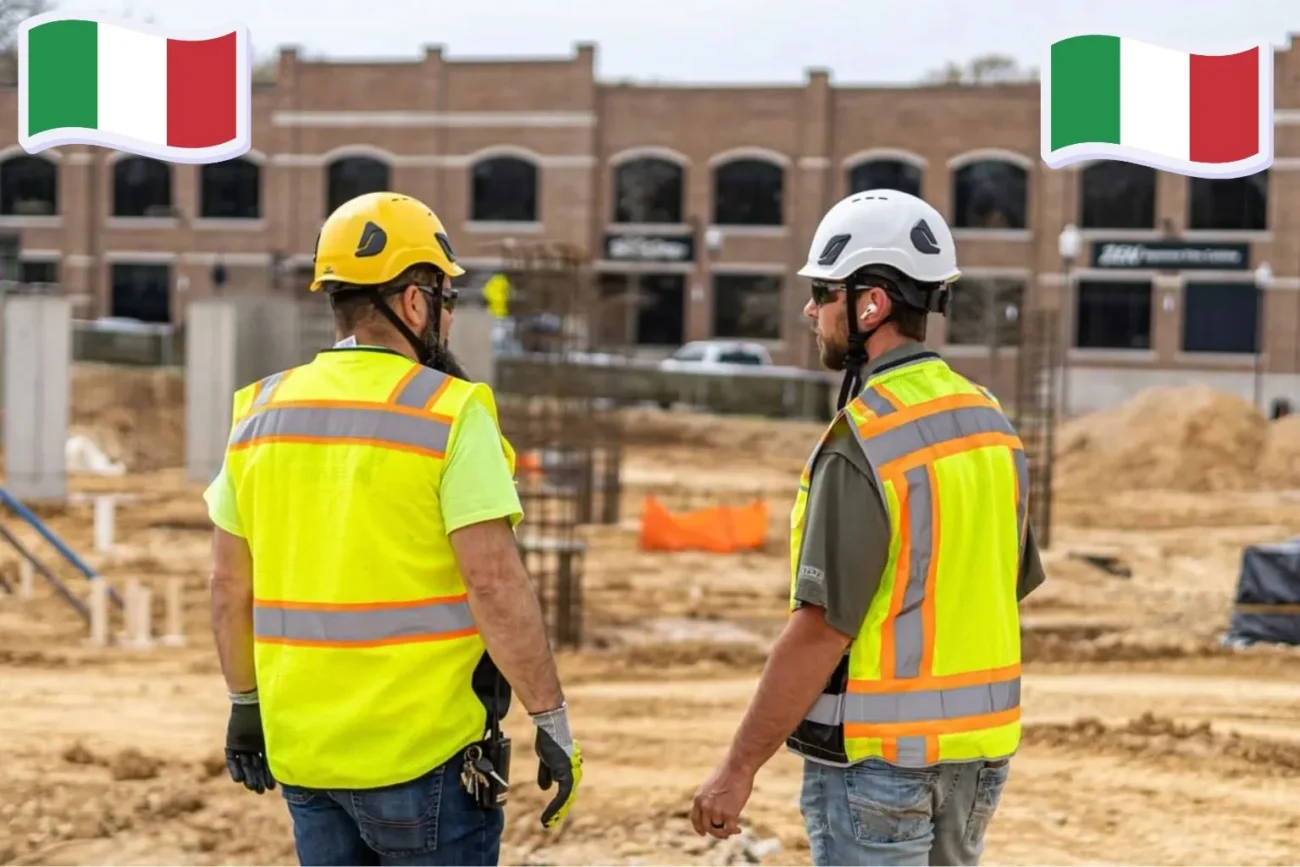
Are you searching for construction worker jobs in Italy in 2027? Italy’s construction industry offers employment opportunities for skilled tradespeople, general labourers, building workers, electricians, plumbers, welders and experienced construction professionals. Residential development, commercial buildings, road infrastructure, industrial projects and renovation activities create demand for workers with different levels of experience.
For international job seekers from Pakistan, India, Bangladesh, Nepal and other non-European countries, construction employment can be an opportunity to explore the Italian labour market through legal recruitment channels.
Italy’s Decreto Flussi 2026–2028 programme provides immigration quotas for foreign workers. For 2027, the government has authorized 76,200 entries for non-seasonal employment. Construction is among the sectors covered by Italy’s non-seasonal foreign-worker framework, subject to the applicable rules, eligible occupations and available quotas.
The 2027 application process includes employer pre-filing from 23 October to 7 December 2026, with the non-seasonal employment application date scheduled for 16 February 2027. These procedures are handled by employers through the official Italian immigration portal.
This article explains construction employment opportunities in Italy, estimated salaries, available positions, qualifications, required documents, work visa procedures and how international applicants can find genuine vacancies.
Why Consider Construction Worker Jobs in Italy in 2027?
Italy can be an attractive destination for people who have practical construction skills and want to develop their careers in Europe.
The construction sector involves various activities, including building residential properties, commercial structures, industrial facilities, transportation infrastructure and renovation projects.
Some important advantages include:
- Different job categories: Opportunities may be available for general labourers, masons, carpenters, electricians, plumbers and other tradespeople.
- Skilled and entry-level positions: Candidates can explore positions according to their experience and technical abilities.
- Practical career development: Workers can improve their construction techniques and gain international experience.
- Potential long-term employment: Some construction projects require employees for extended periods.
- Specialized career opportunities: Experienced professionals can progress into supervisory and technical positions.
- Employment protections: Legal employees are entitled to applicable workplace protections, social security and employment benefits under Italian regulations.
Actual employment conditions depend on the employer, construction contract, collective labour agreement and project requirements.
Types of Construction Jobs Available in Italy
Italy’s construction industry includes several occupations. The following positions are relevant to candidates searching for construction employment in 2027.
1. General Construction Labourer
Construction labourers assist skilled tradespeople and support everyday building activities.
Responsibilities include:
- Moving construction materials.
- Preparing work areas.
- Loading and unloading supplies.
- Assisting masons and carpenters.
- Maintaining site cleanliness.
- Following construction safety instructions.
Estimated salary: €1,300–€1,700 gross per month.
2. Mason and Bricklayer
Masons and bricklayers work on walls, foundations, concrete structures and other building components.
Responsibilities include:
- Building brick and block walls.
- Preparing mortar and other materials.
- Measuring and aligning construction work.
- Repairing damaged masonry.
- Following technical drawings and measurements.
Estimated salary: €1,600–€2,200 gross per month.
3. Carpenter
Construction carpenters prepare and install wooden structures, frameworks, doors and other building components.
Responsibilities include:
- Measuring and cutting construction materials.
- Preparing wooden frameworks.
- Installing doors and structural components.
- Reading construction drawings.
- Using carpentry tools safely.
Estimated salary: €1,600–€2,200 gross per month.
4. Steel Fixer
Steel fixers prepare and install reinforcement bars used in concrete construction.
Responsibilities include:
- Cutting and bending reinforcement bars.
- Positioning steel reinforcement.
- Tying reinforcement structures.
- Reading reinforcement drawings.
- Maintaining workplace safety.
Estimated salary: €1,600–€2,200 gross per month.
5. Plumber
Construction plumbers install and maintain water supply, drainage and plumbing systems in residential and commercial buildings.
Responsibilities include:
- Installing water pipes.
- Connecting drainage systems.
- Installing plumbing fixtures.
- Identifying leaks.
- Testing completed installations.
Estimated salary: €1,700–€2,300 gross per month.
6. Electrician
Construction electricians install electrical systems and equipment in buildings and industrial facilities.
Responsibilities include:
- Installing electrical wiring.
- Connecting distribution boards.
- Installing lighting systems.
- Testing electrical installations.
- Following electrical safety regulations.
Estimated salary: €1,700–€2,400 gross per month.
7. Painter
Construction painters handle interior and exterior painting, surface preparation and finishing work.
Responsibilities include:
- Preparing walls and ceilings.
- Applying paint and protective coatings.
- Repairing minor surface imperfections.
- Using painting equipment.
- Maintaining clean work areas.
Estimated salary: €1,500–€2,000 gross per month.
8. Tiler
Tilers install ceramic, porcelain and other flooring or wall materials.
Responsibilities include:
- Preparing surfaces.
- Measuring and cutting tiles.
- Applying adhesives.
- Installing floor and wall tiles.
- Completing grouting and finishing.
Estimated salary: €1,600–€2,100 gross per month.
9. Welder
Construction and industrial welders join metal components used in structural and fabrication work.
Responsibilities include:
- Performing welding operations.
- Preparing metal surfaces.
- Reading technical drawings.
- Inspecting completed welds.
- Following welding safety procedures.
Estimated salary: €1,800–€2,600 gross per month.
10. Excavator and Heavy Equipment Operator
Heavy equipment operators handle machinery used for excavation, earthmoving and construction activities.
Responsibilities include:
- Operating authorized construction machinery.
- Excavating construction areas.
- Moving earth and materials.
- Performing basic equipment inspections.
- Following site safety procedures.
Estimated salary: €1,800–€2,500 gross per month.
Estimated Construction Worker Salaries in Italy 2027
Construction salaries vary according to professional experience, location, technical qualifications, working hours and collective labour agreements.
The following figures are approximate gross monthly estimates for informational purposes. They are not confirmed vacancies or guaranteed salaries.
| Job Position | Estimated Monthly Salary |
|---|---|
| General Construction Labourer | €1,300–€1,700 |
| Mason / Bricklayer | €1,600–€2,200 |
| Carpenter | €1,600–€2,200 |
| Steel Fixer | €1,600–€2,200 |
| Plumber | €1,700–€2,300 |
| Electrician | €1,700–€2,400 |
| Painter | €1,500–€2,000 |
| Tiler | €1,600–€2,100 |
| Welder | €1,800–€2,600 |
| Heavy Equipment Operator | €1,800–€2,500 |
| Site Supervisor | €2,000–€2,800 |
| Construction Engineer | €2,300–€3,500 |
Actual take-home earnings will be lower than gross salary after applicable deductions. Accommodation, transportation, meals and overtime payments should be checked separately in the employment contract.
Popular Locations for Construction Employment in Italy
Construction employment opportunities can be found in different Italian regions. Industrial development, housing projects, commercial construction and infrastructure activities influence local recruitment demand.
Milan
Milan is an important commercial and industrial centre. Construction activities include residential developments, commercial buildings, renovations and infrastructure improvements.
Rome
Rome has residential construction, public infrastructure, commercial development and building renovation activities.
Turin
Turin has industrial facilities, residential developments and infrastructure-related construction work.
Bologna
Bologna and surrounding areas have commercial, residential and industrial construction activities.
Naples
Naples has opportunities connected with residential buildings, renovation, infrastructure and urban development.
Florence
Florence has building restoration, renovation and residential construction activities.
Verona
Verona is an important economic location in northern Italy, with industrial, commercial and infrastructure-related development.
Candidates should search across multiple cities instead of limiting applications to one location.
Eligibility Criteria for Construction Jobs in Italy
The requirements depend on the job category and employer. However, applicants generally need to meet the following conditions:
- Meet the minimum legal working age.
- Hold a valid passport.
- Have relevant construction experience where required.
- Understand basic construction safety procedures.
- Be physically capable of performing the advertised duties.
- Possess technical qualifications for specialized positions.
- Be willing to work according to project schedules.
- Have the legal authorization required to work in Italy.
Entry-level labourer positions may not require advanced education. However, electricians, plumbers, welders, machinery operators and supervisors may need relevant professional qualifications or documented experience.
Skills Required for Construction Workers
Employers generally look for candidates who can complete their assigned duties safely and efficiently.
Important skills include:
- Technical knowledge: Understanding construction methods and materials.
- Physical fitness: Ability to perform job-related physical activities safely.
- Teamwork: Coordinating with other construction workers and supervisors.
- Communication: Understanding workplace instructions.
- Time management: Completing assigned tasks according to project schedules.
- Equipment handling: Using construction tools and machinery correctly.
- Safety awareness: Following protective equipment and site safety procedures.
- Problem-solving: Identifying and reporting construction-related issues.
Basic Italian language knowledge can be especially useful when communicating with supervisors and understanding safety instructions.
Documents Required for Construction Jobs in Italy
Applicants should prepare their employment and identification documents before applying.
Commonly requested documents include:
- Updated CV or professional resume.
- Valid passport.
- Recent passport-size photographs.
- Educational certificates, where applicable.
- Previous employment experience letters.
- Technical and vocational certificates.
- Welding qualifications, if applicable.
- Machinery operating certificates, where required.
- Professional references.
- Additional documents requested by the employer.
International applicants should ensure that their CV accurately describes their previous construction experience and technical abilities.
Italy Work Visa Requirements for Non-EU Construction Workers
Non-EU nationals generally need an appropriate work authorization and employment visa before entering Italy for ordinary employment.
Italy’s Decreto Flussi system regulates many foreign-worker admissions through annual quotas.
2027 Decreto Flussi Information
According to the Italian Ministry of Labour’s official announcement:
- 76,200 places are allocated for non-seasonal subordinate employment.
- 89,000 places are allocated for seasonal employment.
- 650 places are allocated for self-employment.
The 2027 programme has a pre-filing period from 23 October to 7 December 2026. The scheduled application date for non-seasonal subordinate employment is 16 February 2027.
Construction recruitment must satisfy the relevant sector and occupational eligibility conditions. These overall figures should not be interpreted as 76,200 construction vacancies.
Step 1: Find an Italian Employer
First, obtain a genuine job offer from an Italian construction company or an eligible employer.
The employer must be willing to recruit a foreign worker and follow the applicable immigration procedure.
Step 2: Employer Applies for Nulla Osta
The employer submits the application for work authorization, known as Nulla Osta, through the Italian immigration authorities and the applicable quota system.
Step 3: Wait for Authorization
The application must be approved before the worker proceeds with the employment visa process.
Step 4: Apply for an Employment Visa
After the necessary authorization is issued, the applicant applies through the Italian embassy or consulate responsible for their country of residence.
Step 5: Travel to Italy
Once the employment visa is approved, the worker can travel to Italy according to the visa conditions.
Step 6: Apply for a Residence Permit
After entering Italy, the worker must complete the applicable residence permit formalities. The European Commission’s immigration guidance specifies that the residence permit application must be initiated within eight days of arrival.
Official immigration websites:
- Italian Ministry of Labour: https://www.lavoro.gov.it/
- Italian Ministry of Interior: https://www.interno.gov.it/
- Italian Immigration Portal: https://portaleservizi.dlci.interno.it/
- Italian Visa Information: https://vistoperitalia.esteri.it/
- European Commission Immigration Portal: https://home-affairs.ec.europa.eu/policies/migration-and-asylum/eu-immigration-portal/employed-worker-italy_en
How to Apply for Construction Worker Jobs in Italy 2027
Finding a genuine construction vacancy requires preparation and careful communication with employers.
Follow these steps to improve your chances of finding suitable employment.
Step 1: Prepare Your Professional CV
Create a professional CV containing your personal details, education, construction experience and technical skills.
Clearly mention your previous positions, such as mason, electrician, plumber, carpenter, painter, welder or general labourer.
Include the number of years you have worked in construction and any professional qualifications.
Step 2: Search for Construction Vacancies
Use established employment websites to search for available positions.
Recommended job portals:
- Indeed Italy: https://it.indeed.com/
- LinkedIn Jobs: https://www.linkedin.com/jobs/
- EURES European Job Portal: https://eures.europa.eu/
- InfoJobs Italy: https://www.infojobs.it/
- Randstad Italy: https://www.randstad.it/
- Adecco Italy: https://www.adecco.it/
- Manpower Italy: https://www.manpower.it/
- Gi Group Italy: https://www.gigroup.it/
Step 3: Search Using Italian Job Titles
Using Italian keywords can help you discover more relevant vacancies.
Try these search terms:
- Operaio Edile – Construction Worker.
- Muratore – Mason.
- Manovale Edile – Construction Labourer.
- Carpentiere – Carpenter.
- Elettricista – Electrician.
- Idraulico – Plumber.
- Saldatore – Welder.
- Imbianchino – Painter.
- Piastrellista – Tiler.
- Escavatorista – Excavator Operator.
- Capocantiere – Construction Site Supervisor.
Step 4: Check the Employer’s Recruitment Conditions
Before applying, confirm the company’s identity and whether it accepts applications from candidates living outside the European Union.
Ask whether the employer can arrange the required work authorization under the applicable immigration rules.
Step 5: Submit Your Application
Send your CV through the official recruitment website or employer’s verified contact details.
Mention your preferred job category, experience, qualifications and availability.
Step 6: Attend the Interview
Prepare for questions about your previous construction projects, tools, technical knowledge, safety awareness and availability.
Some employers may arrange online interviews for international candidates.
Step 7: Review the Employment Offer
Before accepting a job, carefully check:
- Monthly gross salary.
- Job title and responsibilities.
- Contract duration.
- Daily working hours.
- Overtime arrangements.
- Weekly rest days.
- Accommodation and transportation, if provided.
- Social security and insurance arrangements.
- Work permit and visa procedures.
Step 8: Complete the Legal Immigration Process
Follow the official work authorization and employment visa procedures before travelling to Italy.
Do not begin employment without the legal authorization required for your circumstances.
Important Safety Tips for International Job Seekers
Overseas employment applications require careful verification.
Keep these points in mind:
- Apply through established recruitment companies and verified employers.
- Never trust guaranteed visa promises.
- Do not pay money for fake work permits.
- Verify the company’s official business information.
- Request a written employment contract.
- Confirm salary and accommodation conditions.
- Never surrender your original passport to an unverified agent.
- Use official Italian government websites for immigration information.
A genuine employer should be able to explain the recruitment process and the legal requirements for employing a non-EU worker.
Frequently Asked Questions (FAQs)
1. Can foreigners apply for construction jobs in Italy in 2027?
Yes. Non-EU nationals can apply for eligible construction employment opportunities. They must meet the applicable immigration requirements, and the employer must obtain the necessary work authorization where required.
2. What is the salary of a construction worker in Italy?
An entry-level construction labourer may earn approximately €1,300–€1,700 gross per month. Skilled tradespeople, such as electricians, plumbers and welders, may earn approximately €1,700–€2,600 depending on experience and employment conditions.
3. Are construction jobs in Italy available without experience?
Some general labourer and construction assistant positions may accept candidates without previous professional experience. However, specialized positions generally require relevant skills and qualifications.
4. Can Pakistani and Indian workers apply for construction jobs in Italy?
Yes. Pakistani, Indian and other non-EU nationals can pursue eligible construction employment opportunities through the legal recruitment and immigration process. The employer must satisfy the applicable authorization requirements.
5. Is Italian language knowledge necessary for construction employment?
Italian language skills are beneficial but may not be compulsory for every position. Basic Italian can help workers understand instructions, communicate with supervisors and follow safety procedures.
6. Where can I find genuine construction vacancies in Italy?
Candidates can search Indeed Italy, LinkedIn Jobs, EURES, Randstad, Adecco, Manpower and Gi Group. Applicants should contact employers directly to confirm vacancy details and international recruitment eligibility.
Conclusion
Construction worker jobs in Italy in 2027 offer potential opportunities for skilled tradespeople and general construction workers interested in developing an international career.
From masonry and carpentry to plumbing, electrical installation, welding and general building work, the industry includes different occupations for candidates with various levels of experience.
International applicants should prepare a professional CV, search through established recruitment platforms and verify that their prospective employer can follow the legal work authorization procedure.
Italy’s 2027 Decreto Flussi programme provides an important legal framework for eligible foreign employment, but securing a genuine job offer and meeting the applicable immigration conditions remain essential.
Start exploring construction vacancies, apply for positions that match your professional skills and take the necessary steps towards building your future career in Italy.
